

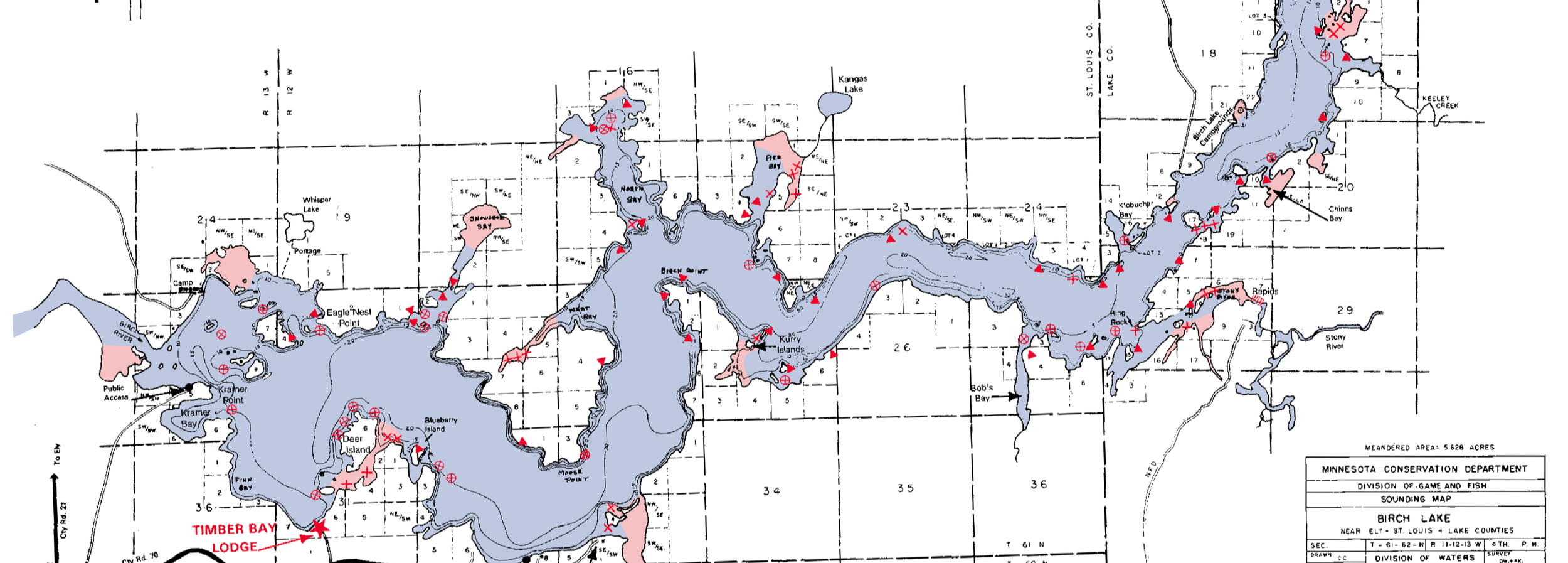
Tactical Guide to Mastering Birch Lake in Minnesota
Invaluable Insights
We built this guide because we respect your time on the water.
We’ve built our offerings to support you, including service runs twice weekly and on-call support when you need it. We’ll keep you stocked, efficient, and on the bite.
Read this, trust the electronics, and get your lines wet. The fish are there. The variable is you.
The invaluable information that follows covers
The Physics of the Water
How the tannic stain acts as natural polarized sunglasses, extending the Walleye feeding window into the "Noon Bite" so you can fish a gentleman's schedule.The Structural Mechanics
Why you need to abandon the weed line and hunt the "granite highway" using bottom bouncers and wire arms to tick over jagged rock without snagging.The Logistics of the Hunt
How to utilize your Houseboat not just as a bed, but as a mobile Forward Operating Base (FOB), allowing you to wake up on the structure and eliminate commute friction.
The "Mothership"
Your Tactical Advantage
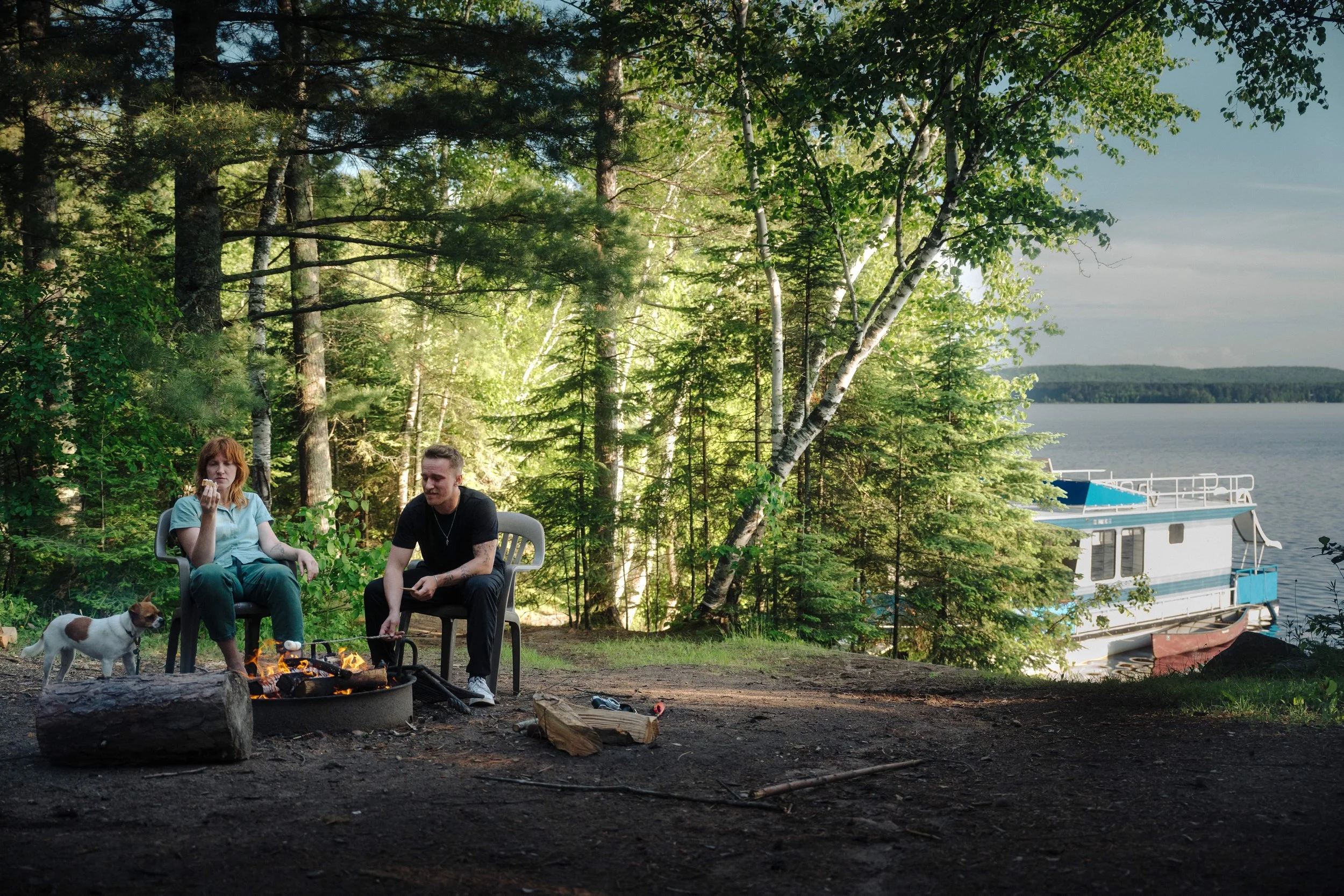
Timber Bay Lodge offers a unique logistical asset that serious anglers often underutilize: the houseboat fleet. The houseboat should not be viewed merely as a floating hotel, but as a mobile Forward Operating Base (FOB) that offers distinct strategic advantages.
Eliminate Commute Friction
Standard anglers staying in cabins or hotels often waste 1-2 hours daily commuting from the dock to their fishing spots. A houseboat moored in a remote bay (e.g., near the Stony River inlet) allows anglers to wake up on the structure. You are fishing the moment the coffee is poured.
The "Deck Casting" Strategy
Many houseboats can be moored on islands adjacent to productive drop-offs. Anglers can fish lighted slip bobbers off the back deck at night while cooking dinner. This is the most effective and comfortable way to target the nocturnal bite without the hazards of navigating a boat in the dark.
Power Management
The houseboat generator allows for the recharging of trolling motor batteries for the fishing skiff (towed behind). This ensures 100% power availability for heavy current fishing every morning, a critical factor for maintaining boat control in wind or current.
The Arena
Hydrography and Biological Foundations of a Riverine Reservoir
Birch Lake, located in the Superior National Forest of St. Louis and Lake Counties, Minnesota, operates fundamentally as a dynamic, flow-driven reservoir system rather than a static basin.
Covering a surface area that fluctuates between 7,063 and 7,628 acres depending on water levels managed by the Minnesota Power dam, and boasting over 90 miles of intricate shoreline, this body of water represents a hydrological intersection between a classic Canadian Shield fishery and a high-volume river system.
The lake serves as a critical reservoir for the South Kawishiwi River watershed, a primary artery of the Rainy River Headwaters Basin. This distinction is not merely academic; it is the primary variable dictating biological behavior and predator positioning. The system is in a state of constant, perceptible motion, fed by a convergence of major tributaries: the South Kawishiwi River from the northeast, the Stony River from the southeast, the Dunka River from the south, and the Birch River proper. This continuous hydrological throughput creates a fishery where "current seams," flow-generated eddies, neck-downs, and "pinch points" replace static weed lines as the dominant structural features for locating active fish.
The lake is effectively a conveyor belt of nutrients and oxygen. The water residence time is approximately 70 days, meaning the entire volume of the lake is replaced roughly every two months. This relatively rapid turnover maintains higher dissolved oxygen levels in key structural areas, allowing active feeding windows to persist longer than in stagnant waters. Furthermore, the shoreline is approximately 75% to 90% publicly owned federal land, preserving the near-shore littoral zone from the habitat degradation often associated with heavy residential development. This preservation maintains the integrity of the "wood bite"—fallen timber and submerged laydowns that are critical for Smallmouth Bass and post-spawn Walleye.
The bathymetry of Birch Lake further complicates the puzzle. While the average depth is a modest 12.8 feet, the lake contains deep basins plunging to 25 feet and beyond, interspersed with jagged granite reefs, sunken islands, and expansive sand flats. The bottom composition is primarily governed by the Canadian Shield geology—bedrock and granite dominate the structural elements, while the bays often feature softer substrates conducive to vegetation.
This geological diversity requires a multi-faceted approach: techniques that work on the "granite highway" of the main lake will fail in the vegetation of Kramer Bay.
Major Inflows and Hydrodynamics of the Birch lake Reservoir
This schematic (not to scale) illustrates the primary hydrological inputs feeding Birch Lake. Note the convergence o fthe South Kawishiwi and Stony Rivers, creating high-percentage current zones that concentrate forage. (click image to enlarge)
Navigation, Topology & “The Milk Run”
-
Morning (8:00 AM - 10:00 AM): Stony River Inlet. Pitch jigs and minnows on the sand flats where the warmer river water hits the lake.
Mid-Day (11:00 AM - 2:00 PM): The Narrows. Troll crankbaits through the pinch points between the mainland and the central islands. The current keeps fish active here even when the sun is high.
Evening (6:00 PM - Sunset): Kramer Bay. Move into the shallower bays. Look for any remaining timber or wood structure for Bass and Pike.
-
Park the mothership on a campsite near Dunka Bay or Birch River Narrows.
The Trick: At night, deploy a "green light" or submersible fishing light off the back deck. In the stained water, this draws in bugs, then baitfish, then Crappie and Walleye. You can catch a limit while sitting in a lawn chair on the back deck.
-
Do not look at Birch Lake as one lake. It is hydrologically distinct. Break it into three "zones" based on current flow:
The North Arm (Inflow Zone): This is the area near the Hwy 1 bridge where the South Kawishiwi River dumps in. It is high-current, rocky, and oxygen-rich. Target this in Spring/Post-Spawn.
The Central Basin (Reservoir Zone): The main body where the lake widens. This holds the deep humps, sunken islands, and the "old river channel." Target this in Mid-Summer (July/Aug) for suspended fish.
The South Arm (Stony River Delta): The southeast section where the Stony River enters. It features large sand flats and warmer water. Target this for the Opener and early season as it warms fastest.
-
Birch Lake is an impounded reservoir. The original riverbed is still down there, winding through the bottom.
Visual Indicator: Look at your Navionics or LakeMaster chip. You will see the contour lines tighten significantly in the middle of the basin (e.g., dropping from 20’ to 35’ quickly). That trench is the highway.
The Sweet Spot: Fish don't hover directly in the trench; they sit on the "lip" or the inside turns of the channel bends. Look for where the contour lines make a sharp "U" shape. Park your boat on the shallow side of that "U" and cast into the deep channel.
-
Because Birch Lake flows like a river, water accelerates when it gets squeezed between two landmasses (islands or points).
Where to look: Look at the map for Williamson Island or the narrows near Hag’s Point. Any gap between an island and the mainland is a potential pinch point.
How to fish it: Don't fish the middle of the fast water. Fish the eddy—the slack water just behind the current. Fish sit there waiting for food to wash by.
Special Feature
The "Tom Boley" Style
To truly unlock Birch Lake, one must move beyond passive fishing and adopt active, technical presentations. These insights are inspired by one of our favorite fishing educators, Tom Boley.
The "Snap Jig" Technique
This reaction-based technique is highly effective for neutral or inactive Walleye, particularly in the mid-summer period.
The Concept: Instead of a slow drag, the jig is "snapped" or ripped upward aggressively (1-2 feet) and then allowed to plummet back to the bottom on a semi-slack line.40 This mimics a dying baitfish and triggers a reflex strike.
Gear: Use a 6'8" to 7' Medium-Power, Extra-Fast action rod. Pair with a 2500-size reel spooled with 10lb braid and a 10lb fluorocarbon leader.
Lure: Heavy jigs (1/4oz to 3/8oz) paired with plastics like the "Kalins Jerk Minnow" or "Paddle Tail." The plastic must be durable to withstand the aggressive cadence.
Precision Planer Board Trolling
For suspended fish, trolling with planer boards allows you to put lures in front of fish that are shy of the boat.
The Concept: Planer boards carry the fishing line out to the side of the boat, widening the trolling spread and covering water that hasn't been disturbed by the boat's motor.41
Application: Use line-counter reels to precisely replicate the amount of line out (which dictates depth). If you catch a fish with 120 feet of line out, reset all rods to that exact length.

Electronics and Boat Control
The Technical Edge
Fishing Birch Lake efficiently requires mastering modern electronics, specifically regarding the interpretation of the granite substrate and boat positioning in current.
Side Imaging Interpretation
Granite vs. Mud
On Side Imaging, hard bottom (granite/rock) appears as bright white or yellow with high contrast and defined edges. Mud or silt appears dark, dull, and featureless.
The Transition Line
Walleye often patrol the exact interface where the rock pile (bright return) meets the basin mud (dark return). This "transition line" acts as a highway for fish movement. Waypoint this specific edge and target it precisely.
Acoustic Shadows
In stained water, rely on "acoustic shadows." If you see a bright white spot (boulder) followed by a long black streak (shadow) behind it, that indicates a significant vertical structure. These boulder shadows are prime ambush spots for Smallmouth or Walleye.
Boat Control in Current
Spot-Lock Technology
In the river sections (South Kawishiwi) or wind-blown narrows, physical anchoring is difficult and noisy due to the snaggy rock bottom. A trolling motor equipped with Spot-Lock (GPS anchor) is indispensable for holding position on a current seam or specific rock pile without spooking fish.
Drift Socks
On windy days in the main lake basin, the wind can push the boat too fast (over 1.5 mph) for effective bottom bouncing or live bait rigging. Deploying a drift sock slows the drift speed to the optimal 0.8–1.0 mph window, ensuring the bait stays on the bottom without snagging or lifting out of the strike zone.
Structure & Cover Facts
-
You are likely seeing the effects of the Rusty Crayfish. This invasive species has decimated much of the native cabbage and weed growth in Birch Lake.
The Adjustment: Stop looking for weed lines. They are unreliable here.
The Pivot: Shift your focus entirely to "Hard Structure" (Rock and Wood). Look for boulder piles, submerged timber, and jagged rock reefs. The Smallmouth Bass have adapted to eat the crayfish, so where you find rocks (crayfish habitat), you find the Bass.
-
On a stained lake like Birch, you are looking for "The Shadow."
On your screen: Hard bottom (granite/boulder) returns a very bright white/yellow signal. Soft bottom (mud/silt) is dark.
The Juice: You want the "Transition Line"—the exact edge where the bright white turns to dark. That is the rock-to-mud transition. If you see tall shadows stretching behind the white dots, those are large boulders. Walleye love the shade of those boulders in current.
The Physics of Stained Water
Optical Tactics and Sensory Adaptation
The defining environmental variable of Birch Lake, second only to current, is its water chemistry.
The water is heavily stained by tannins—natural organic compounds leached from the surrounding peat bogs and wetlands. This gives the water a distinct "root beer" or tea-colored appearance, with an average transparency of only 4.3 feet. It is crucial to distinguish this from "muddy" or turbid water caused by suspended sediment. Tannic water is chemically stained but often free of particulate matter, creating a unique optical environment that drastically alters light penetration and predator behavior.
The Tapetum Lucidum Advantage and the "Noon Bite"
Scientific literature on Sander vitreus (Walleye) indicates that their optical physiology is highly specialized for low-light conditions. They possess a tapetum lucidum, a reflective layer of tissue behind the retina that reflects visible light back through the retina, increasing the light available to the photoreceptors.6 In clear water environments, high solar penetration during midday overstimulates this sensitive optical system, forcing Walleye to retreat to deep water or bury themselves in dense weed cover to avoid "optical pain." This restricts the primary feeding windows in clear lakes to low-light periods: dawn, dusk, and night.6
In Birch Lake, the tannic stain acts as a natural filter, effectively functioning as polarized sunglasses for the entire ecosystem.
The tannins absorb high-intensity light wavelengths rapidly within the first few feet of the water column. The implication for the angler is profound: the "noon bite" is a statistical reality on Birch Lake. Walleye remain active and feed aggressively in shallow-to-mid-depth ranges (8–15 feet) throughout the middle of the day because the stained water mitigates light intensity, allowing them to hunt comfortably without the need to retreat to the abyss.2 This allows the angler to adopt a "gentleman’s schedule," prioritizing location and presentation over sleep deprivation.
The Chromatic Shift: The Science of Lure Color
The absorption spectrum of tannic water differs significantly from that of clear water. As light penetrates the column, tannins absorb shorter wavelengths (violets and blues) and longer wavelengths (reds) rapidly, while preserving wavelengths in the yellow, orange, and green spectrums. This physics dictates the effectiveness of lure colors.
The Gold Standard
Empirical data and long-standing angler sentiment universally validate Gold and Metallic finishes as top producers in tannin-stained systems.2 The reflective properties of metallic gold maximize the limited available light, creating a high-contrast "flash" that triggers reaction strikes by mimicking the flash of a baitfish flank. The mantra "If it ain't Gold, it usually don't fold" is rooted in optical physics.The UV Factor: Ultraviolet (UV) enhanced lures—particularly in fluorescent oranges, pinks, and chartreuses—are critical tools in this environment. These pigments absorb ultraviolet light, which penetrates deeper than much of the visible spectrum, and re-emit it at longer wavelengths. This fluorescence makes the lure appear to "glow" against the dark, featureless background of the tannic water, providing a target for predators when natural contrast is low.
Contrast over Pigment
In the deepest or darkest sections of the lake, color perception diminishes entirely, and vision shifts to silhouette detection. Here, Black and Purple become dominant colors because they cast the strongest, most distinct silhouette against the lighter surface water when viewed from below.
Lure Color Visibility Spectrum in Tannic Water
Comparative analysis of color visibility depth. Note that Gold and Chartreuse retain visbility significantly deeper in stained water than Blue or Red, which fade to gray rapidly.
Vibration and the Lateral Line
In low-visibility environments, predators cannot rely solely on sight. They utilize their lateral line system—a sensory organ running the length of the body—to detect low-frequency vibrations and pressure changes in the water. To trigger a strike in Birch Lake's stained water, a lure must displace water and create a sonic footprint. The use of bladed jigs (Chatterbaits), aggressive "thumping" plastic tails (paddletails), and rattling crankbaits is necessary to help the fish locate the lure before it enters their visual field. A silent, finesse presentation often goes unnoticed in the gloom; a presentation with "thump" announces its presence.
The "Stained Water" Advantage
-
, it saves it. In clear lakes (like Mille Lacs), Walleye spook easily during the day. In Birch Lake, the Tannic Stain filters out sunlight.
The Result: Fish stay shallower (8–15 feet) and feed actively during the middle of the day. You do not need to fish at 2:00 AM to catch big fish here.
Color Adjustment: Blue and Purple lures disappear in this water. You must use Gold, Metallic, Chartreuse, or Orange. You need flash and vibration.
-
No. Those are likely trophy Walleye chasing Cisco (Tullibee).
The Mistake: Most anglers drop a jig to the bottom and ignore these fish.
The Fix: Trolling. Use deep-diving crankbaits (like a Rapala Tail Dancer) or lead core line to run your lures exactly at 20 feet. These suspended fish are usually the biggest ones in the system.
The Forage Matrix:
The Cisco and The Rusty Crayfish
The behavior of game fish in Birch Lake is driven by the distribution and movements of their prey.
The food web is bifurcated between a pelagic (suspended) forage base and a benthic (bottom-dwelling) invasive force. Understanding this duality is key to predicting whether predators will be looking up or looking down.
The Cisco (Tullibee) Connection
Birch Lake supports a robust population of Cisco (Coregonus artedi), also colloquially known as Tullibee or Lake Herring. These oily, soft-rayed fish serve as the "high-calorie butter" for the lake's trophy-class Walleye and Northern Pike.
The Thermal Squeeze
Cisco are cold-water stenotherms, requiring well-oxygenated water with temperatures generally below 50°F–60°F.17 During the peak heat of summer (July–August), surface temperatures on Birch Lake rise, forcing Cisco into the deeper basins (25-35+ feet) to find thermal refuge. However, if the deepest water becomes anoxic (depleted of oxygen), the Cisco are "squeezed" into a narrow band of the water column—the thermocline—where temperature and oxygen levels overlap minimally.
The Suspended Predator Phenomenon
Because the Cisco suspend over deep basins during summer, trophy Walleye often detach from the bottom structure entirely to hunt them. Anglers dragging live bait rigs on the bottom in 30 feet of water will frequently mark massive arches above them (at 18-22 feet) but fail to catch fish. These are Cisco-feeding Walleyes. To intercept them, one must abandon bottom-contact tactics and employ open-water trolling techniques with crankbaits or snap-jigging strategies at the specific depth of the bait balls.
The Rusty Crayfish Disruption
Conversely, the benthic zone of Birch Lake has been fundamentally altered by the invasion of the Rusty Crayfish (Faxonius rusticus). This invasive species is larger and more aggressive than native crayfish, and its presence has ecological ripple effects.
Habitat Displacement
Rusty Crayfish are prolific consumers of aquatic vegetation, often denuding weed beds entirely. This loss of vegetation forces game fish—particularly Smallmouth Bass and Walleye—to relate more heavily to hard structures such as rocks, wood, and rip-rap, as the "weed bite" becomes less consistent.
The Smallmouth Boom
While detrimental to vegetation, Rusty Crayfish provide a massive, high-protein food source for Smallmouth Bass. Fisheries data suggests that Smallmouth populations in infested lakes often explode in size and density because of this abundant forage. This makes rock piles, rip-rap, and boulder fields the primary high-percentage target zones for Smallmouth.
Tactical Implications
When fishing rocky areas, lures that mimic crayfish—specifically in orange, brown, and olive hues—are highly effective. Tube jigs and football jigs dragged along the bottom leverage the predator's conditioning to hunt bottom-scurrying prey.
Hydrography and Structural Mechanics
The "River Mindset"
Because Birch Lake acts as a flowage reservoir, current is the primary positioning mechanism for fish.
The angler must adopt a "River Mindset," prioritizing flow dynamics over static structure.
The "Pinch Point" Theory
Water moving through the reservoir accelerates when it is forced through a narrow gap, a phenomenon described by Bernoulli's principle. These "narrows" or "pinch points" create natural feeding conveyors.
The Mechanism
As the water volume squeezes between two islands or a peninsula and the mainland, the velocity increases. When the water exits the narrows and the channel widens, the current velocity drops, creating eddies (slack water) and wash-out holes behind structural elements like boulders, points, or underwater reefs.
Predator Positioning
Walleye are energy-efficient predators. They will not swim constantly against the heavy current in the center of the flow. Instead, they position themselves in the "slack water" eddy just behind the current seam—the boundary between fast and slow water—waiting for disoriented baitfish to drift into their strike zone.
Identification Strategy
Visual identification is key. Look for surface disturbances, "nervous water," or distinct ripple lines where smooth water meets choppy water. These indicate the current seam. Cast upstream and let the jig drift naturally into the seam, maintaining contact with the bottom.
Key Structural Sectors
The lake can be dissected into distinct structural zones, each requiring a tailored approach.
Seasonal Progression
The Angler's Almanac
Success on Birch Lake is not static; it requires syncing location and tactics with the seasonal calendar.
Spring (Opener – Early June): The Shallow Current Bite
Biological Context
Post-spawn fish are recovering and feeding heavily to replenish energy reserves. They gravitate toward warm, moving water that concentrates baitfish.
Target Depth: 4–12 feet.
Primary Locations
River mouths (Stony, Kawishiwi), current areas near bridges, and shallow sandy bays (like those near the Stony River delta) that warm quickly under the spring sun.
Tactical Approach: The Pitching Jig
Gear
A 6'8" to 7' Medium-Light, Extra Fast spinning rod is essential for detecting light bites in current. Use 6lb monofilament or 10lb high-vis braid with a fluorocarbon leader.Presentation
Pitch 1/8oz or 1/4oz jigs tipped with live minnows (shiners or rainbows) toward the shoreline or current breaks. A slow, lift-drop retrieve that allows the jig to swing with the current is lethal.Lure Selection
Gold/Chartreuse, Firetiger, and Glow White jigs are the top performers in the stained water.
Summer (Late June – August): The Deep Structure Transition
Biological Context
As water temperatures rise, larger fish migrate to mid-lake structures (humps, sunken islands) and deep rock piles to find cooler water and stable oxygen. The "Dog Days" push the majority of the population to the 18–25+ foot range.
Target Locations
Mid-lake granite reefs, humps surrounded by deep water, and the sharp breaklines at the edges of the main basin.
Tactical Approach A: Bottom Bouncing.
Rationale
The bottom of Birch Lake is jagged granite. A standard jig will snag constantly. A bottom bouncer uses a stiff wire arm to "tick" over rocks while keeping the bait elevated in the strike zone.The Rig
Use a 1oz to 2oz bottom bouncer with a 3-4 foot snell. Equip the harness with Spinner blades (Gold, Hammered Brass, or Smiley Blades) and bait with a nightcrawler or leech.Speed Control
Maintain a speed of 0.8 – 1.2 mph. This speed is critical to keep the blade spinning while maintaining bottom contact.
Tactical Approach B: Precision Slip Bobbers.
Rationale
Once a school is located on a specific rock pile using sonar, parking directly over them with Spot-Lock and dropping a leech under a slip bobber offers surgical precision that trolling cannot match.The Rig
Use a 7' to 7'6" rod (longer rods help pick up line slack for hooksets). Lighted bobbers are indispensable for the evening bite.
Fall (September – Freeze): The Current Return
Biological Context
As water cools, fish sense the approaching winter and feed aggressively to bulk up. The cooling water triggers a migration back toward current areas and steep breaklines where baitfish congregate.
Target Locations
Narrows, steep drop-offs adjacent to deep water, and river inlets where flow increases with autumn rains.
Tactical Approach: Trolling Crankbaits and Big Minnows.
Rationale
Fish are often scattered but aggressive. Trolling covers water efficiently to locate active pods.Lure Selection
#5 or #7 Shad Raps and Flicker Shads in Perch, Firetiger, or Gold patterns work well. Trolling speeds should be increased slightly to trigger reaction strikes.
Angler’s Decision Matrix: Real-Time Tactical Adjustments
Use this decision matrix (click to enlarge) to determine the optimal presentation based on environmental conditions. Note the shift from ‘Search’ tactics (Trolling/Drifting) to ‘Spot’ tactics (Jigging/Bobbers) as fish are located.
Species-Specific Profiles and Advanced Strategies
Walleye (Sander vitreus)
Population Status
Birch Lake is a premier Walleye fishery, featuring strong naturally reproducing year classes. Anglers can expect high catch rates of "eater" size fish in the 13–20 inch range, with a legitimate population of trophy-class fish exceeding 9 pounds.
Advanced Tactic
The "Suspended Revolution"
In mid-to-late summer, sophisticated anglers must utilize their electronics to hunt Cisco-feeders. If 2D sonar reveals distinct arches suspended at 20–25 feet over 40–50 feet of water, these are active Walleye targeting pelagic baitfish.
Technique
Deploy deep-diving crankbaits like the Reef Runner 800 Series or Rapala Deep Tail Dancer on lead core line or utilizing snap weights to reach the specific depth of the marks. Trolling speeds of 1.8 to 2.2 mph are effective for these suspended predators.
Smallmouth Bass (Micropterus dolomieu)
Population Status
The Smallmouth population in Birch Lake is experiencing a boom, likely fueled by the abundance of Rusty Crayfish as a high-calorie forage base.15
Location Strategy
Unlike Walleye, which may move deep, Smallmouth often remain shallower (4–12 feet) throughout the summer if crayfish are present. Focus on shallow rock piles, rip-rap shorelines, and timber.
Advanced Tactic: The "Tube Drag"
Use a 3.5 to 4-inch tube jig in Green Pumpkin or Root Beer colors with Orange flake (mimicking the Rusty Crayfish). Instead of hopping it, drag it slowly across the bottom to disturb substrate and imitate a crawling crayfish. Topwater lures like the Whopper Plopper can also be explosive in the early morning over shallow rocky shoals.
Northern Pike (Esox lucius)
Population Status
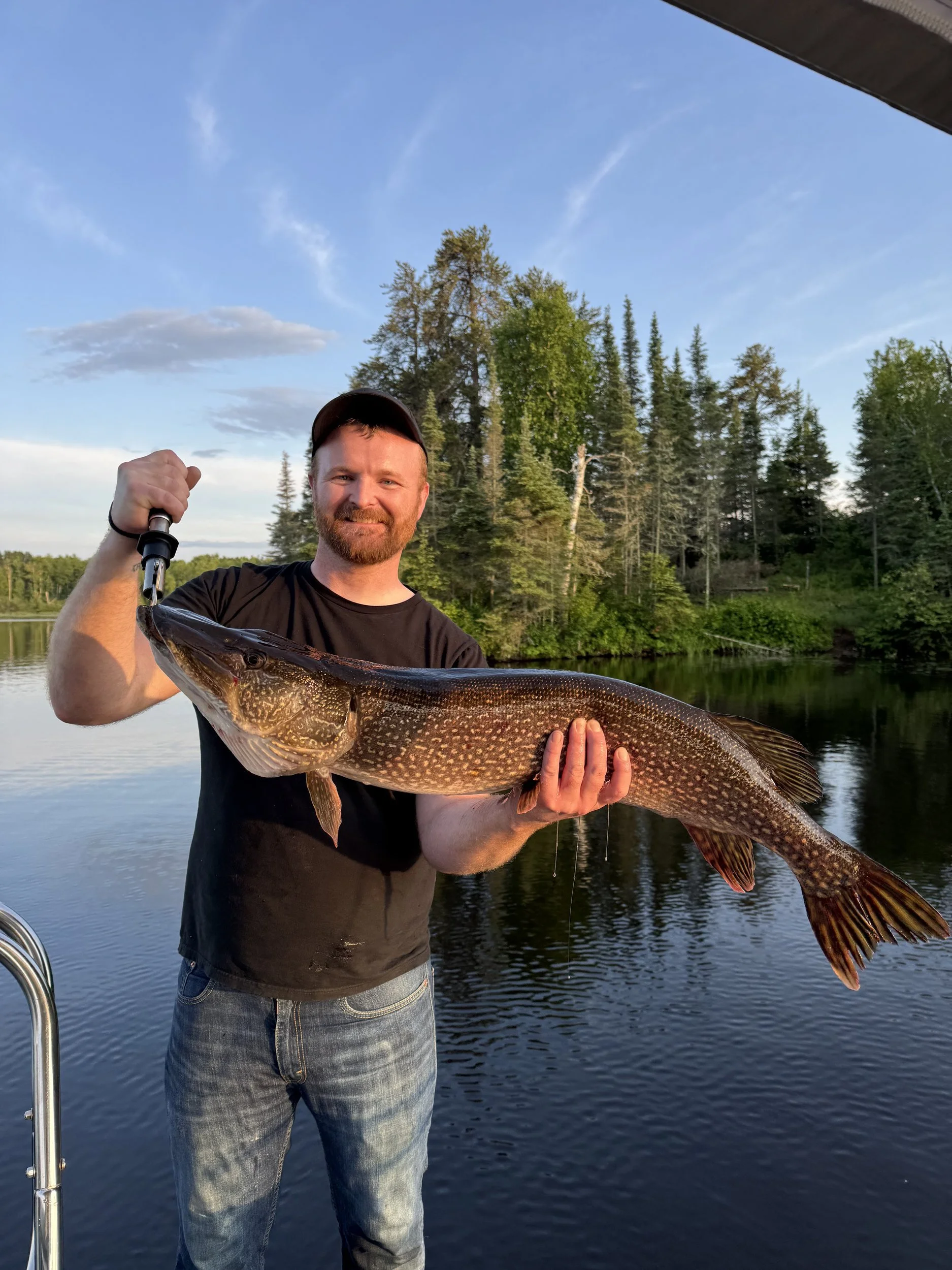
The lake holds a high density of smaller "hammer-handle" pike but maintains a distinct trophy potential for fish in the 30–40+ inch class.
Location Strategy
Focus on the remaining weed lines in bays like Kramer Bay, or target the open-water basin where large Pike suspend to feed on Cisco alongside the Walleye.
Advanced Tactic: Big Baits for Big Fish
To select for size, use large profile lures. Trolling "Doctor Spoons" or large "Daredevles" along deep weed edges or casting large swimbaits (5-7 inches) can trigger strikes from the larger, dominant predators while filtering out the smaller pike.
Crappie and Panfish
Population Status
While less targeted, Birch Lake produces slab-sized Crappies, with fish up to 13 inches reported.
Location Strategy
Look for sunken brush piles or standing timber in 15-25 feet of water, often near steep breaks. Late summer can see them suspending over basins similarly to Walleye.
Tactic
Small jigging spoons or slip bobbers with crappie minnows are standard. Electronics are vital for locating the suspended schools.
Research Source & Credibility Summary
This document synthesizes proprietary internal data with public fisheries intelligence to create a "source-of-truth" for Birch Lake.
1. Biological & Environmental Data
Primary Source: Minnesota Department of Natural Resources (MN DNR) Lakefinder & Fisheries Management Reports.
Key Insight: Confirmed the specific "stained" water clarity (Secchi depth ~4.3 ft) and the presence of Rusty Crayfish.
Application: Validates the recommendation to abandon deep weedline tactics (due to crayfish destruction) and prioritize rock/wood structure.
Forage Base Analysis: MN DNR & University of Minnesota St. Anthony Falls Laboratory.
Key Insight: Confirmed the presence of Coregonus artedi (Cisco/Tullibee) as the primary high-calorie forage for trophy fish.
Application: Supports the "Suspended Trolling" strategy for mid-summer, as Walleye detach from the bottom to hunt suspended schools of Cisco.
2. Local Knowledge & patterns
Crowdsourced Intelligence: FishingMinnesota Forums & HotSpotOutdoors.
Key Insight: Historical forum threads (dating back 10+ years) consistently identify specific high-percentage spots: Stony River mouth for early season, and the "narrows" for current flow.
Application: Provides the specific "community holes" to either target or avoid depending on pressure.
Internal Documents: The Birch Lake Playbook & TBLH Customer Sentiment.
Key Insight: Validated the "Noon Bite" phenomenon due to tannic water and the logistical advantage of the houseboat "mothership" strategy.
3. Expert Methodology
Technique Validation: Tom Boley (YouTube) & John Bergsma (Fisherman's Digest).
Key Insight: "Lake Breakdown" methodology—categorizing lakes by flowage vs. natural basin. Bergsma specifically has filmed on Birch Lake, validating the efficacy of high-speed trolling and jigging in this specific system.
Application: Used to structure the FAQ into "problem/solution" sets rather than generic advice.
Works cited
Birch Lake, accessed January 20, 2026, https://www.co.lake.mn.us/wp-content/uploads/2020/12/Birch-final-revised-11.21.18.pdf
A Water Quality Assessment of Select Lakes within the Kawishiwi River Watershed - Minnesota Pollution Control Agency, accessed January 20, 2026, https://www.pca.state.mn.us/sites/default/files/wq-ws3-09030001.pdf
Open Season Walleyes - THE NEXT BITE TV, accessed January 20, 2026, https://thenextbite.com/open-season-walleyes/
Walleye biology and identification | Minnesota DNR, accessed January 20, 2026, https://www.dnr.state.mn.us/fish/walleye/biology.html
Does Lure Color Matter? The Surprising Science Behind Walleye Color Vision, accessed January 20, 2026, https://virtualangling.com/fish/walleye/does-lure-color-matter-the-surprising-science-behind-walleye-color-vision/
Dialing In Stained-Water Walleyes | Ice Fishing Magazine, accessed January 20, 2026, https://www.deeranddeerhunting.com/lifestyle/dialing-in-stained-water-walleyes
The Best Jig Colors for Walleye: A Comprehensive Guide - FishUSA, accessed January 20, 2026, https://www.fishusa.com/learn/best-walleye-jig-colors/
Working the Jig Bite for Walleyes on Fisherman's Digest TV - Lake of the Woods Tourism, accessed January 20, 2026, https://lakeofthewoodsmn.com/fishermans-digest-jig-bite-lake-of-the-woods/
Up Your Odds on Stained-water Walleyes - MidWest Outdoors, accessed January 20, 2026, https://midwestoutdoors.com/fishing/odds-stained-water-walleyes/
Master Walleye Fishing: Expert Guide to Jig Color Selection - Angling Buzz, accessed January 20, 2026, https://anglingbuzz.com/2018/10/04/jig-color-selection-walleyes/
Understanding Walleye Color Preferences - Angling Wisdom, accessed January 20, 2026, https://anglingwisdom.com/blog/f/understanding-walleye-color-preferences?blogcategory=Fishing+Tips
How to Catch Walleye: Best Tips for 2024 | Boat Ed®, accessed January 20, 2026, https://www.boat-ed.com/blog/how-to-catch-walleye-best-tips-for-2024/
When Smallmouth Bass and Crayfish Collide - Fishing-Headquarters.com, accessed January 20, 2026, https://www.fishing-headquarters.com/smallmouth-bass-crayfish-collide/
Climate change affects lakes, walleye in complex ways - MPR News, accessed January 20, 2026, https://www.mprnews.org/story/2015/09/09/walleye-climate-change
Cisco, gray back, tullibee, lake herring, whitefish - Guide to All Fishes, accessed January 20, 2026, https://allfishes.org/fishes/freshwater/cisco
Tullibee - Mille Lacs Lake Fishing Reports - (Walleye, Ice, Bass) - Fishing Minnesota, accessed January 20, 2026, https://fishingminnesota.com/forums/topic/205905-tullibee/
The Suspended Walleye Revolution - Fishing Minnesota, accessed January 20, 2026, https://fishingminnesota.com/forums/topic/24847-the-suspended-walleye-revolution/
The Problem - Invasive Species: Rusty Crayfish, accessed January 20, 2026, https://invasive-rusty-crayfish.weebly.com/the-problem.html
Milfoil and Rusty Crayfish - Fishing Minnesota - (Spring, Summer & Fall), accessed January 20, 2026, https://fishingminnesota.com/forums/topic/41291-milfoil-and-rusty-crayfish/
Birch Lake - Fishing Minnesota, accessed January 20, 2026, https://fishingminnesota.com/forums/topic/214279-birch-lake/
Birch Lake Fishing Reports - Fishing Minnesota, accessed January 20, 2026, https://fishingminnesota.com/forums/topic/58749-birch-lake-fishing-reports/
South Kawishiwi River - Fishing Minnesota, accessed January 20, 2026, https://fishingminnesota.com/forums/topic/199378-south-kawishiwi-river/
Superior National Forest | South Kawishiwi River Campground, accessed January 20, 2026, https://www.fs.usda.gov/r09/superior/recreation/south-kawishiwi-river-campground
Brook trout found in Dunka River could be threatened by mining pollution - Quetico Superior Foundation, accessed January 20, 2026, https://queticosuperior.org/brook-trout-discovery-in-dunka-river-raises-new-ecological-risks-from-mining/
First day for ice pike - Muskies-Musky Fishing - Outdoor Re-Creation, accessed January 20, 2026, https://hotspotoutdoors.com/forums/topic/36045-first-day-for-ice-pike/?&do=findComment&comment=316614
Birch Lake Lot - XXX Point Street, Babbitt, MN 55706 - TourFactory, accessed January 20, 2026, https://tourfactory.com/1186520
Birch Lake-Ely/Babbitt----HELP!! How to Fish? - Fishing Minnesota, accessed January 20, 2026, https://fishingminnesota.com/forums/topic/7095-birch-lake-elybabbitt-help-how-to-fish/
Mid-August walleye fishing report - Fishing Minnesota, accessed January 20, 2026, https://fishingminnesota.com/forums/topic/205009-mid-august-walleye-fishing-report/
Top Tactic for Catching Summer Walleye | Bottom Bouncers and Spinners Along Deep Weed Edges - YouTube, accessed January 20, 2026, https://www.youtube.com/watch?v=n4hlz6e40EA
Fishing Resorts Minnesota-River Point Resort-Ely Minnesota, accessed January 20, 2026, https://riverpointresort.com/things-to-do/fishing-resorts-minnesota/
How to Fish Big Birch Lake: Best Patterns & Techniques, accessed January 20, 2026, https://www.omniafishing.com/w/big-birch-lake-fishing-reports/fishing-patterns
2025 Minnesota Fishing Regulations - files - MN DNR, accessed January 20, 2026, https://files.dnr.state.mn.us/rlp/regulations/fishing/fishing_regs.pdf
Sidescan interpretation under boat docks : r/bassfishing - Reddit, accessed January 20, 2026, https://www.reddit.com/r/bassfishing/comments/10oqzl8/sidescan_interpretation_under_boat_docks/
Side-Imaging for the Walleye Crowd - Northland Fishing Tackle, accessed January 20, 2026, https://www.northlandtackle.com/side-image-for-the-walleye-crowd/
Side Imaging Explained: How to Read Your Screen & Find More Fish - YouTube, accessed January 20, 2026, https://www.youtube.com/watch?v=qyOolmEFSTQ
Tom Boley's slip-bobber tricks for walleyes ( RAPID FIRE!), accessed January 20, 2026, https://targetwalleye.com/tom-boleys-slip-bobber-tricks-for-walleyes-rapid-fire/
Walleye Early Season Snap Jigging - Jeff Sundin, accessed January 20, 2026, http://www.jeffsundin.com/article-snap-jigging-walleye.html
Summer Trolling for Suspended Walleye - YouTube, accessed January 20, 2026, https://www.youtube.com/watch?v=QDXgiOXAU6U