

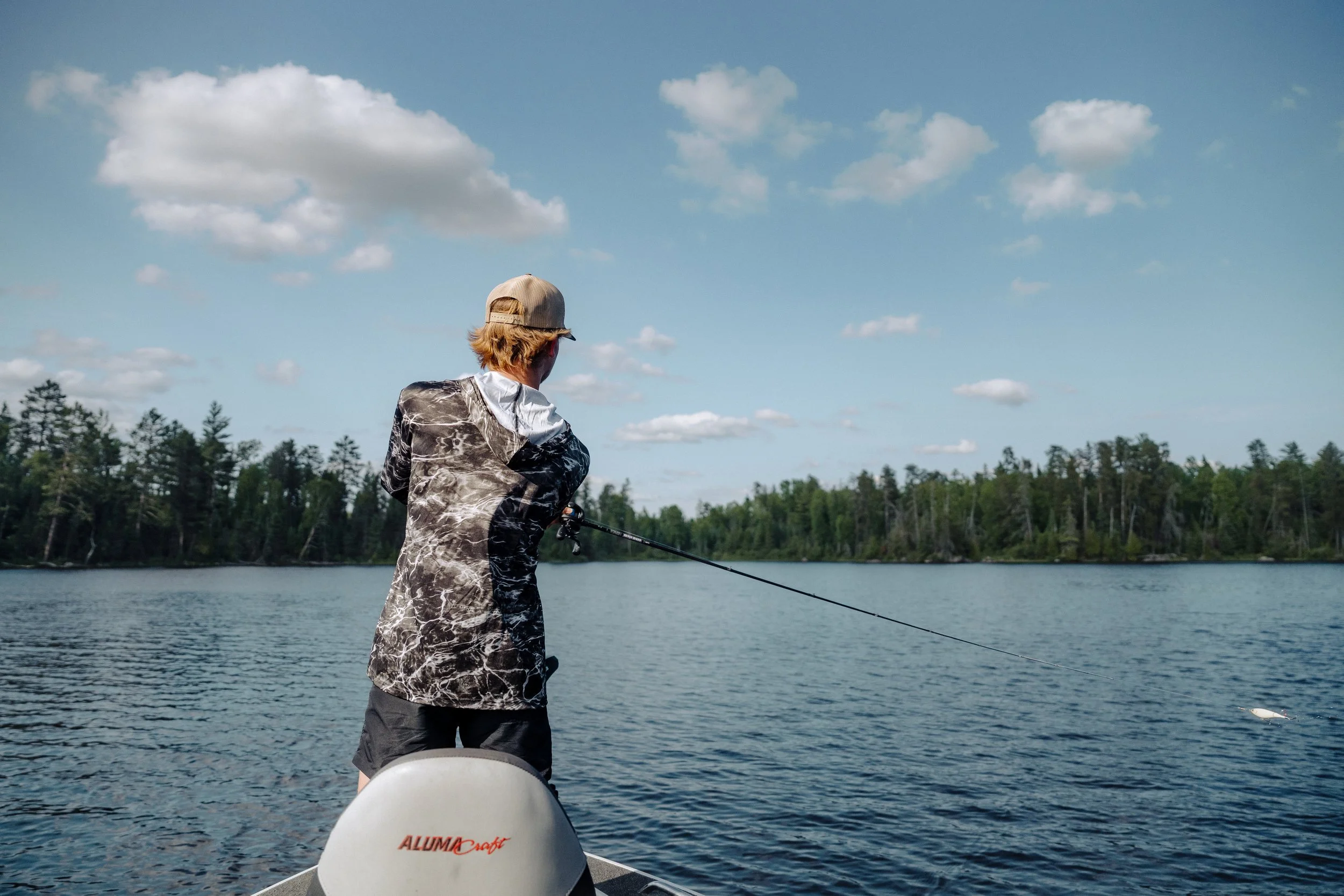
The Birch Lake First Catch Playbook
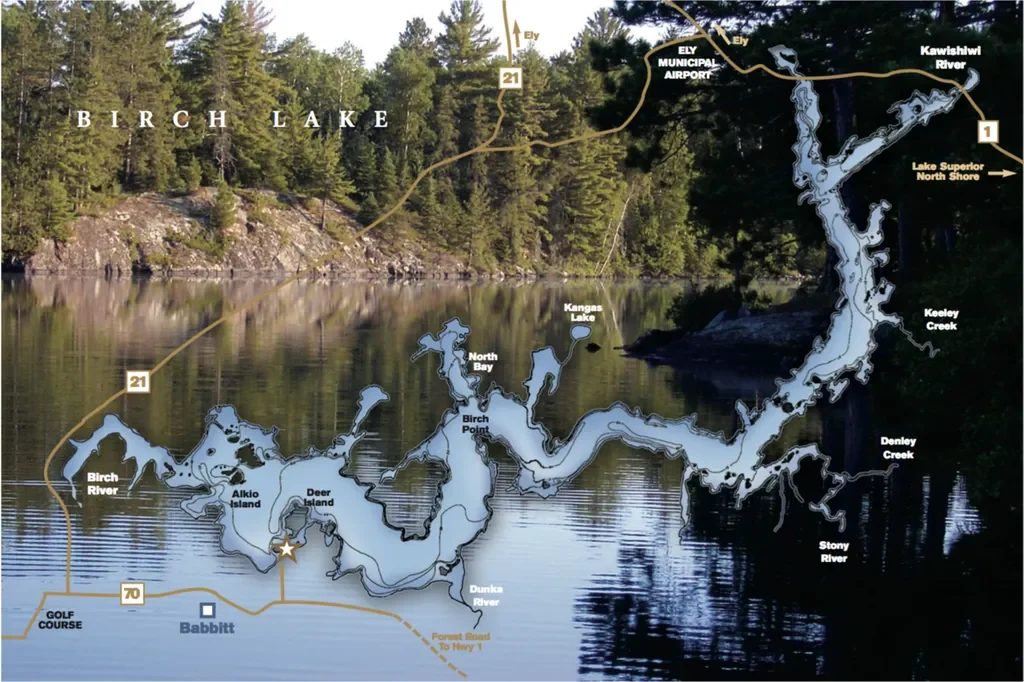
Welcome to the Arena
So, you’ve booked the houseboat (or cabin)…
The dates are circled on the calendar. Most folks stop there and start throwing random tackle into a box the night before they leave.
But you? You’re not "most folks." You’re looking to turn a family vacation into a tactical strike on the Walleye population of Northern Minnesota.
To do that, you need to understand the battlefield before you even see the water. Birch Lake isn’t just a big bowl of water; it’s a living, moving system. It’s 20 miles long, covers 6,000 acres, and sits right on the jagged edge of the Canadian Shield.
Grab your coffee. Let’s break down the map.
PHASE 1: Know Before You Go
The Lay of the Land (And Water)
The "River" Factor
First thing to tattoo on your brain: Birch Lake is technically a river. It’s a reservoir on the South Kawishiwi River system.
What this means for you
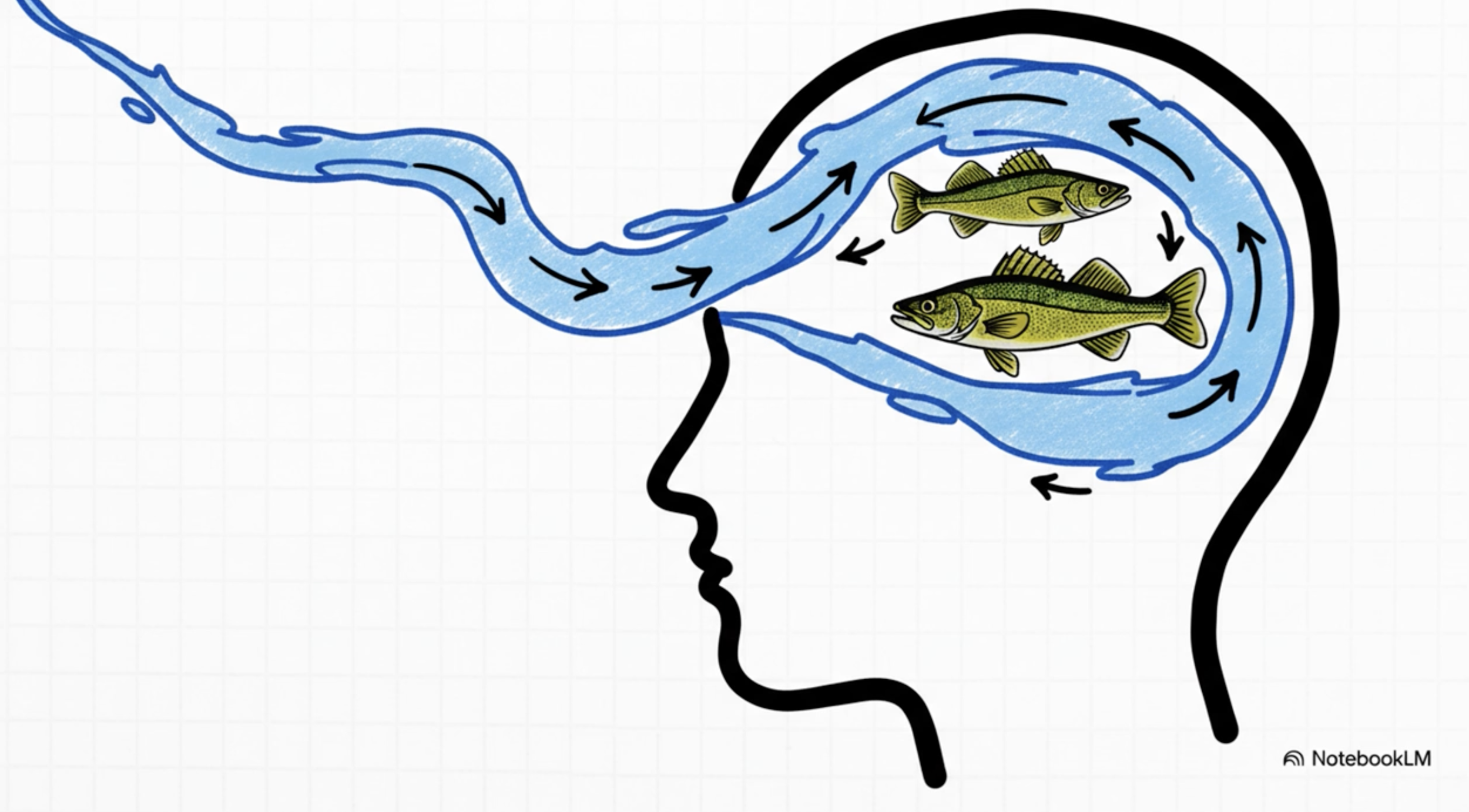
Water is always moving, even if it looks still. Fish set up on "current seams"—places where moving water hits a rock pile or a point.The "Pinch Points"
Look at the map. See where the lake squeezes tight between two islands or shorelines? That’s a funnel for baitfish. Walleye are lazy; they park in the eddy behind a rock and let the current bring dinner to them.
The "Root Beer" Clarity
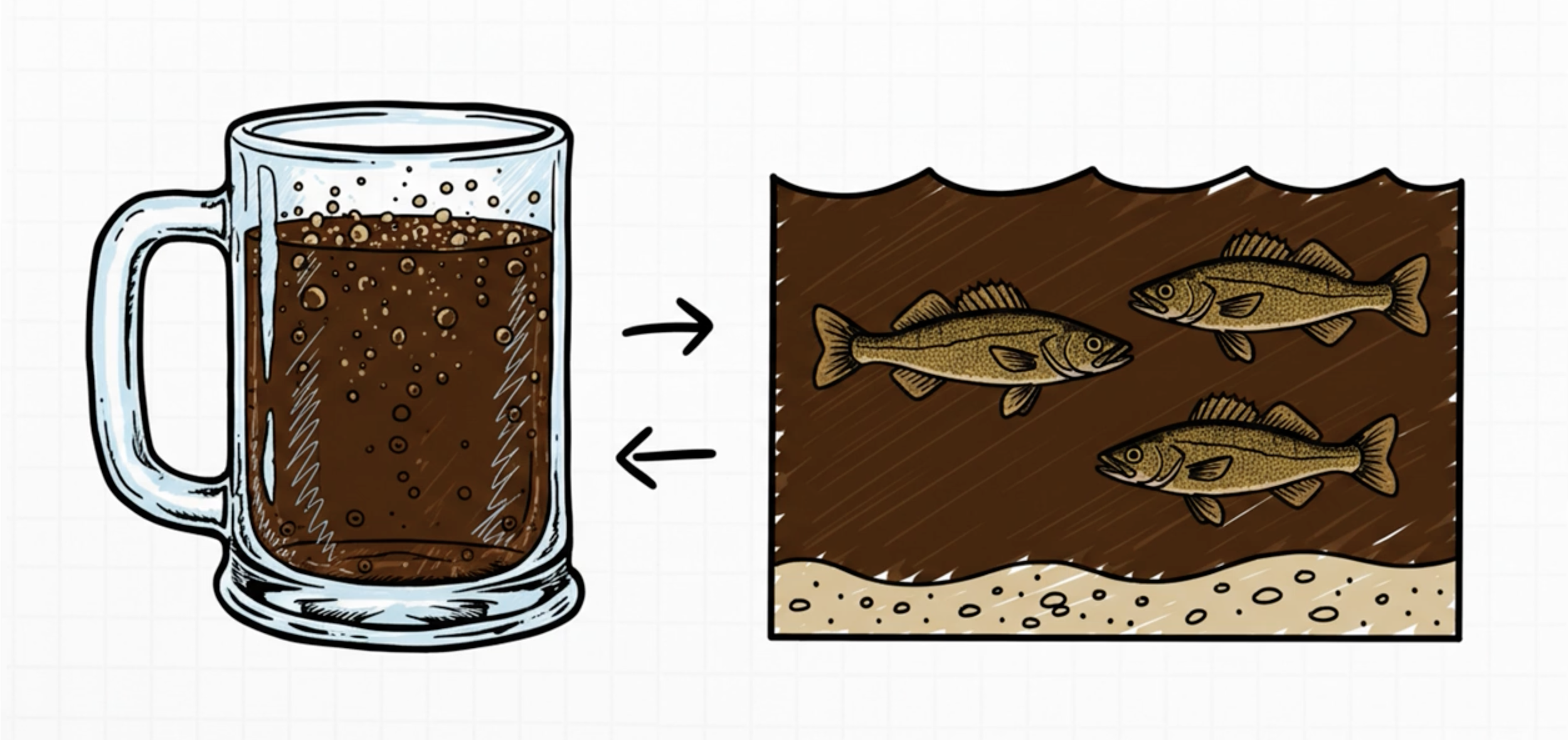
Our water is stained dark brown by natural tannins from the surrounding peat bogs. It looks exactly like A&W Root Beer.
The Advantage
This is huge. In clear lakes, Walleye are vampires—they hate the sun and only bite at night. In our "root beer" water, Walleye feed all day long because the dark water protects their light-sensitive eyes.The Strategy
You don’t need to wake up at 4:00 AM unless you want to. The "noon bite" here is a real thing.
The Seasonal Calendar (Timing Your Depth)
Fish migrate just like birds. If you’re fishing where they were last month, you’re fishing a ghost town.
The Opener & Spring (May - Early June)
The Pattern
Spawning is wrapping up. Fish are hungry and shallow (6–12 feet).Where to Look
Focus on the "inlets"—places where warmer water flows in, like the Stony River mouth or sandy bays that warm up fast in the sun.The Trap
Don’t go deep yet. The big females are recovering in the shallows.
The "Dog Days" (July - August)
The Pattern
As the water warms, the big fish slide off the shoreline and head for the "AC units"—deeper, cooler water (18–25 feet).Where to Look
Mid-lake "humps" (sunken islands) and rock piles. This is classic houseboat territory. You can park right over a hump and fish vertically.The Thermocline
Ask us about this at the dock. It’s the specific depth where the water temp drops fast. Find that depth, find the fish.
The Fall Feedbag (September - Freeze)
The Pattern
They sense winter coming. They school up tight and feed aggressively.Where to Look
They move back toward current areas and steep drop-offs.
The Gear Loadout: What to Pack
Because of our dark water and rocky bottom, your standard clear-water tackle might need a tweak.
Getting Started Pack (Family & Casual)
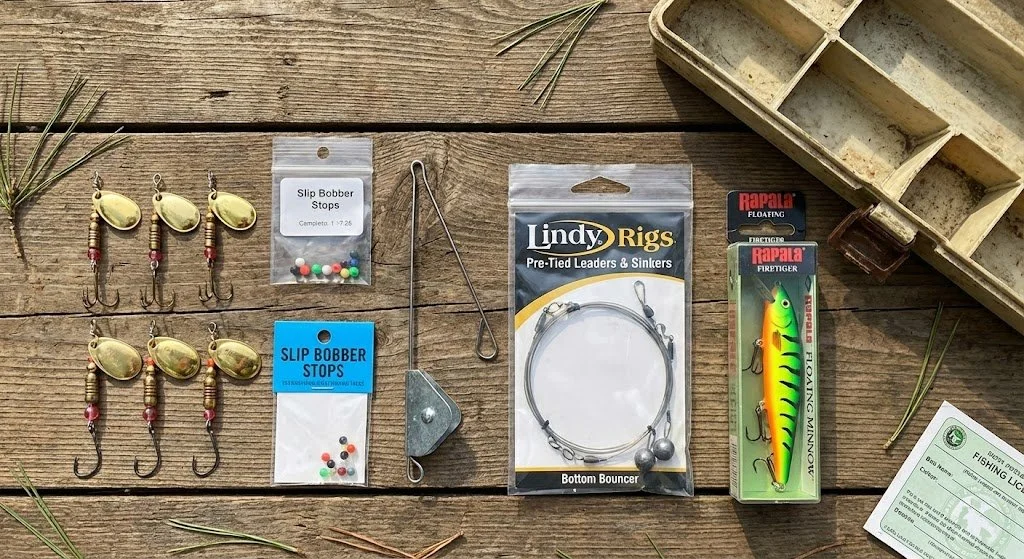
Slip Bobbers: This is the MVP of houseboat fishing. You can set the "stop" knot to any depth (say, 15 feet), but you can still reel it all the way in to cast.
The Setup: A simple leech or minnow under a lighted slip bobber off the back deck of the houseboat at night? That’s legendary.
No-Snag Sinkers: Buy the "walking sinkers" or "slinky weights." They glide over rocks instead of wedges between them.
Upping Your Game (Technical Anglers)
Lure Colors: Ditch the ghosts and naturals. In stained water, you need Gold, Chartreuse, Orange, and Glow. "If it ain't Gold, it usually don't fold (a rod)."
The Secret Weapon: Bottom Bouncers. Our lake bottom is jagged granite. A bottom bouncer wire keeps your bait just above the snags while ticking the rocks to make noise.
Electronics: Bring your portable flasher or graph if you have one. Clamping it to the rental boat transom is a game-changer for finding those mid-lake humps.
PHASE 2: Arrival & Intel
You are about to command a vessel on 20 miles of wilderness water. Take a breath. Ask the questions. Mark the map. Once those engines start, the adventure is on—but the preparation happens right here on the wood planks.
The most successful "First Catch" families spend their first 20 minutes doing a little reconnaissance right here at the marina.
The Boat House Shakedown (The Intel)
You wouldn’t drive cross-country without GPS. Don't drive a houseboat without a "human GPS." Our dock staff aren't just selling bait; they are listening to every boat that comes back in.
Your Mission
Before you leave, find a staff member and ask these three specific questions. Do not be bashful—we want you to catch fish.
Question 1
"What depth are they biting at?"
Fish move up and down like they’re in an elevator depending on the weather. If we say "15 feet," you don't need to waste time fishing in 5 feet of water.Question 2
"What color is working?"
Birch Lake water is stained a beautiful "root beer" color. Sometimes they want bright pink/orange; sometimes they want gold. We know what the last guy used to limit out.Question 3
"Can you mark a 'sure thing' on my map?"
Hand us your Birch Lake map. We will take a Sharpie and put an X on a bay that is easy to park a houseboat in but still holds fish (like the calm bays near the islands).
Houseboat Recon: Setting the Stage
A houseboat isn’t just a boat; it’s a floating living room. But unlike your living room, this one moves, and it has screen doors that love to eat fishing rods.
The "Rod Safety" Rule
Houseboats have sliding glass doors and screen doors. We have seen more rod tips snapped in those doors than we care to count.
The Fix: Establish a "Rod Zone" immediately. Usually, the back corners of the deck are best. Never lean a rod against a sliding door!
The "High Ground" Advantage
Your houseboat puts you higher off the water than a small fishing boat. Use that height!
The Trick: While you are loading luggage, have someone stand on the upper sundeck with polarized sunglasses. Look into the water near the docks. You might spot schools of bluegill or bass hanging in the shadow of the hull. That’s your first clue on what the fish look like today.
Digital Intel (Know Before You Go)
We’re old school, but we use new tools. Check these resources while you’re packing:
Official MN DNR LakeFinder (Birch Lake)
Check the "Fisheries Lake Survey" to see the official gill net counts. It proves we aren’t lying about the fish numbers ;-)The Topography
If you use Navionics or LakeMaster apps on your phone, download the Birch Lake chart now while you have strong Wi-Fi. Service can be spotty out at the campsite.
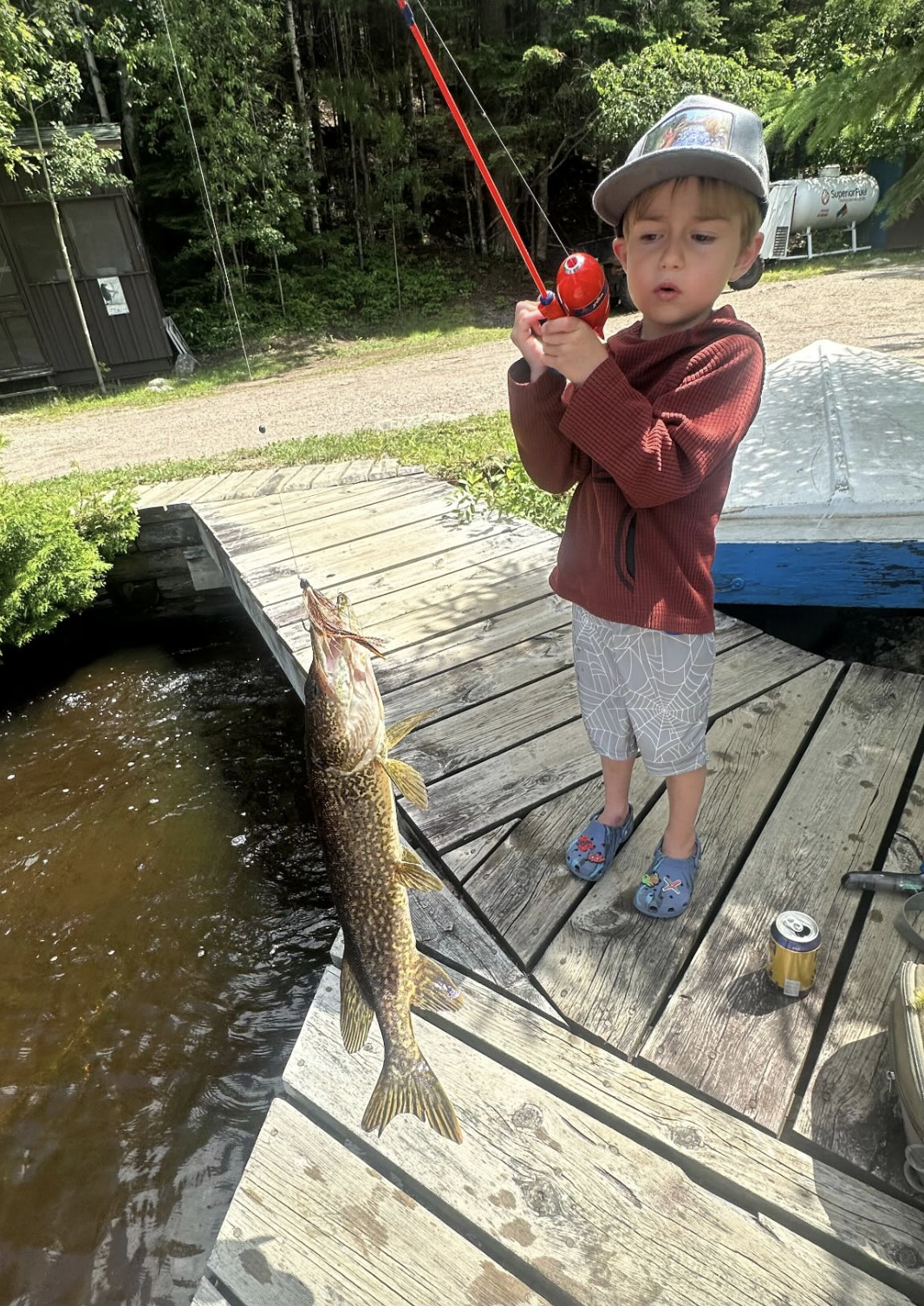
Kidz Club Call-Out: The "Minnow Monitor"
While the adults are hauling coolers and learning how to start the generator, we need to keep the kids busy and engaged with the fishing mission.
The Job: Assign one child to be the "Minnow Monitor."
The Task: If you bought minnows, they need oxygen. The Minnow Monitor’s job is to take the little net and gently stir the water every 10 minutes, or point out the "feisty ones" that look ready to catch a big Walleye. It keeps them focused and teaches them to respect the bait.
PHASE 3: Navigating the Arena
The Houseboat Advantage — Your floating living room becomes your grocery store…
Alright, you’ve left the dock. You’re chugging along at a steady 5 mph, and Birch Lake looks absolutely massive. You might be thinking, "How in the world do I find a fish in all this water?"
Here is the secret to houseboat fishing: You are not a hunter; you are a trapper. You aren't going to zoom around chasing fish. You are going to pick a beautiful spot, set up your "basecamp," and trick the fish into coming to dinner.
Here is how to navigate the arena without a fancy sonar screen.
The "What You See Is What You Get" Rule
You don’t need electronics to know what’s underwater. You just need to look at the shoreline. The land tells you a story about the lake bottom.
The Steep Cliff
If you see a rock wall or steep hill diving into the water, the water there is likely deep right away.
The Catch
Smallmouth Bass love these rocky drop-offs. Cast near the rocks!
The Lily Pads & Reeds
If you see "salad" on the surface, it’s shallow and mucky.
The Catch
This is the "nursery." Great for finding Northerns and Panfish hiding in the weeds.
The Sandy Beach
If the shore is flat and sandy, the water stays shallow for a long way out.
The Catch
Great for swimming, but for fishing, you’ll want to be there only at sunset when the Walleye move up to snack.
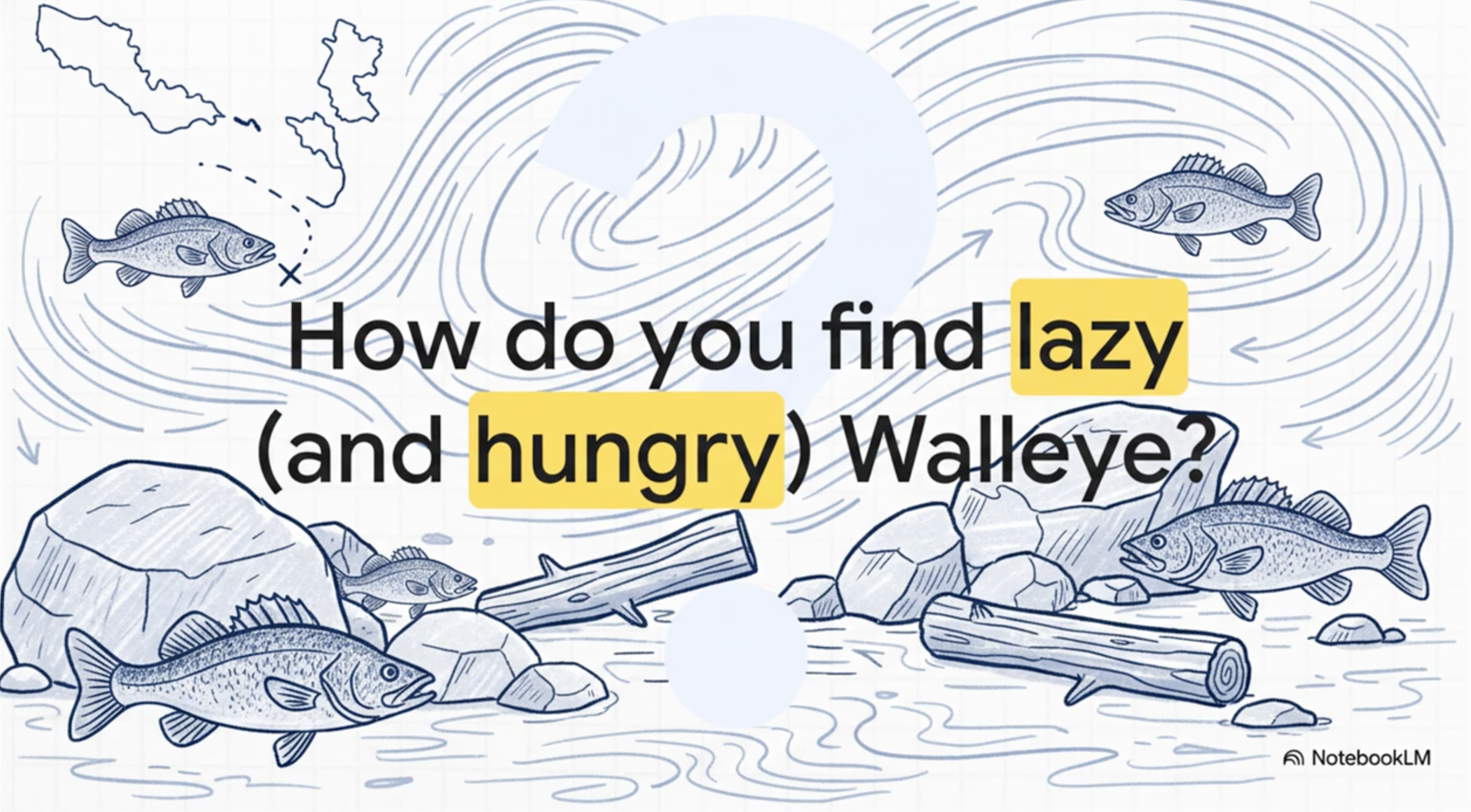
If you want to think like a Walleye, you have to understand one thing: They are lazy, but they are hungry.
Imagine you are at a buffet. Do you sprint around the room grabbing food? No. You stand still and let the conveyor belt bring the food to you. That is exactly what a Walleye does.
The Science
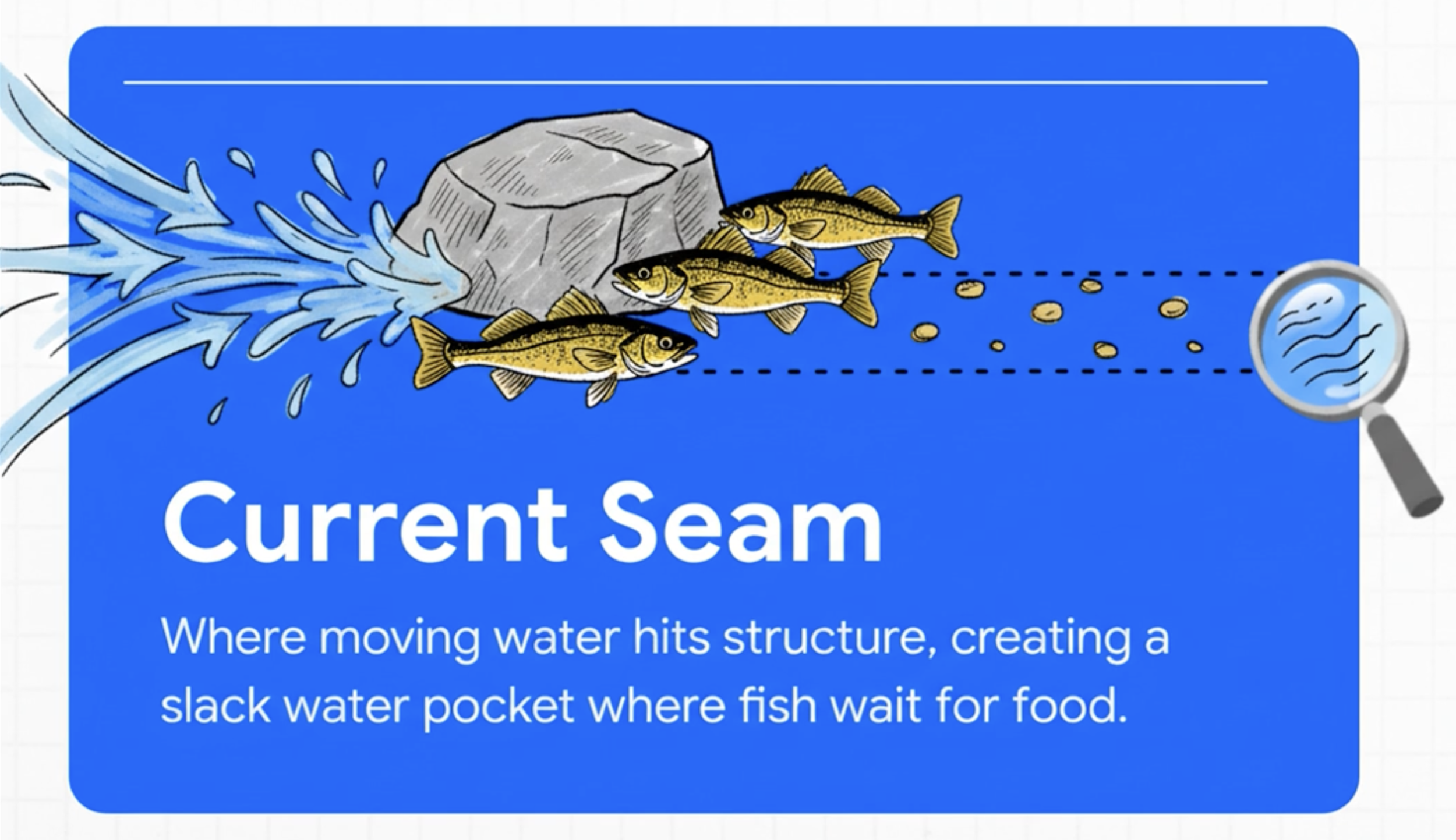
In Birch Lake, water is always moving (especially near the Stony River mouth or narrow channels). The fast water is the "treadmill"—too much work to swim in. The still water is the "couch"—too boring, no food.The Seam
The magic happens right where the fast water meets the slow water. We call this the Current Seam. The Walleye sits in the slow water, staring into the fast water, waiting for a stunned minnow to drift by.
The "Wind-Blown" Trick
Wind is usually a nuisance, but for fishing, it’s a cheat code.
The Concept
The wind blows microscopic bugs (plankton) toward the shore. Small fish follow the bugs. Big fish follow the small fish.The Move
Don't park in the dead-calm water. Park your houseboat so you are casting into the breeze or toward a shoreline that has wind hitting it. It’s a little choppier, but that’s where the food chain is active.
The "Houseboat Swing" (Covering Water Without Moving)
When you beach your houseboat or tie off to shore, you aren't stuck in one spot. You are on a giant pendulum.
The Setup
You’re tied to a tree on shore, and the back of the boat is floating out over deeper water.The Strategy
The wind will naturally swing the back of the boat left and right over the course of an hour.The Lazy Fisher’s Tip
Drop a line with a bobber off the back corner. As the boat swings, your bait slowly covers a huge arc of water—dragging your worm past fish you didn't even know were there. You don’t have to do a thing but watch the rod.
The "Pajama Fishing" Advantage
The single biggest advantage you have over the guys in the fancy fishing boats? You are sleeping on top of the fish.
The Golden Hour
The best bite is often right as the sun touches the tree line, and again at sunrise.The Play
While the "Pros" are racing back to the lodge in the dark, you are already parked. You can fish off the back deck in your pajamas with a mug of coffee (or a cold beverage).The Light Trick
Turn on the back deck light for a little while after dark. Sometimes this attracts bugs, which attract minnows, which attract the Crappies. It’s like turning on a "Vacancy" sign for fish.
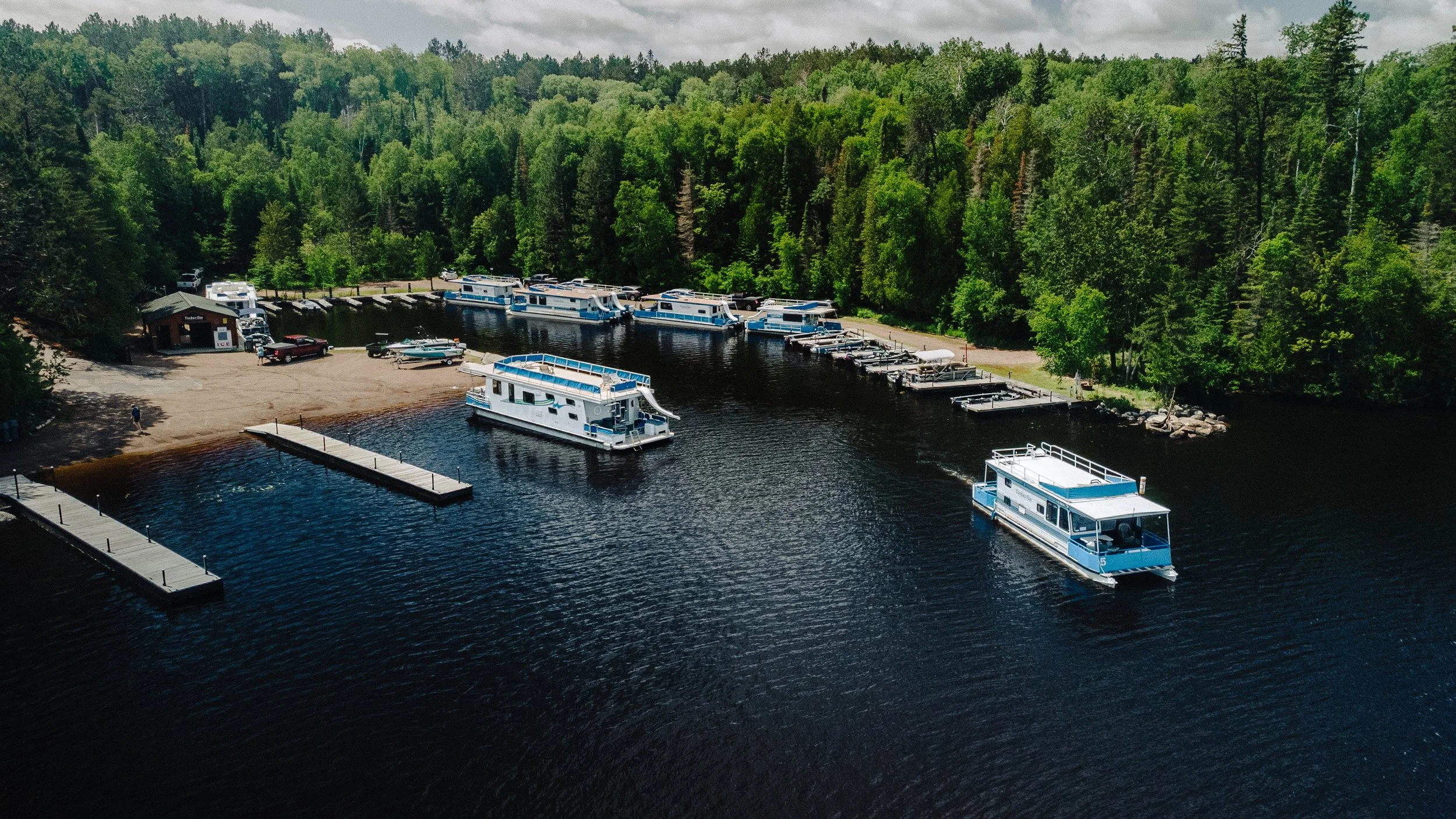
PHASE 4: The Return Trip – "Sticking the Landing"
You’ve caught the fish, you’ve swam the bays, and you’ve eaten more s’mores than recommended by the FDA. Now comes the part nobody likes: heading back.
But here’s the thing—how you end the trip determines how you remember it. If you rush, it’s stressful. If you follow the "Boyce Method," it’s just one last cruise.
The "Reverse Bucket Brigade" (Packing Up)
The biggest rookie mistake is waiting until the boat is tied to the gas pump to start packing suitcases. That is how you lose a toothbrush (or a child ;-).
The 30-Minute Warning
When you are about 30 minutes from the marina (roughly when you pass the last big island), kill the music and do the "Trash Bag Tango."The Move
Walk through the boat with two bags: one for trash, one for recycling. Clear the decks. If the boat is tidy when you dock, you will feel like a pro captain stepping off a yacht.
The Final Approach: Don't Be a Hero
This is the only part that makes captains nervous. You are bringing a big boat into a tight parking spot.
The Secret
You don’t have to park it alone!The Protocol
Radio the lodge (Channel 68 or call us) when you see the breakwall. We will send the "Dock Squad" out.Your Job
Your only job is to bring the boat in slow and straight. We will catch the ropes. We will pull you in. Do not jump off the boat. Do not try to stop the boat with your leg. Just smile, wave, and let us do the heavy lifting
Ready for the sequel?
Most families book their "next year" trip while they are still unpacking the car. If you want to claim your favorite week (or try for the Wolf Moon week in winter), stop by the front desk before you hit the road.